

✓ Commercial conveyancing is significantly more complex than residential — it typically takes 3 to 6 months
✓ It covers offices, retail units, warehouses, industrial sites, land, and mixed-use developments
✓ Key differences from residential include VAT implications, CPSE forms, complex lease negotiations, and higher SDLT rates
✓ Due diligence is critical — environmental, planning, and title risks can be substantial in commercial transactions
✓ NPS Law are SRA-regulated commercial property solicitors with 30 years of combined expertise, serving clients across England and Wales
Buying a commercial property in the UK is one of the most significant financial decisions a business owner or investor will make. Whether you are acquiring your first business premises, expanding a commercial portfolio, or purchasing land for development, the legal process involved — known as commercial conveyancing — is far more complex than buying a home.
This guide explains everything you need to know about commercial conveyancing in the UK. We cover the process step by step, explain the key differences from residential conveyancing, break down the costs involved, and help you understand what to look for in a commercial conveyancing solicitor.
Commercial conveyancing is the legal process of transferring ownership or leasehold interest in a commercial property from one party to another. It covers any property used for business purposes rather than residential living — from a small retail unit on a high street to a large industrial warehouse or a development site.
The process is managed by a commercial property solicitor who acts on behalf of either the buyer or the seller. Their role is to carry out due diligence, negotiate contracts, manage the financial transfer, and ensure the transaction is legally valid and protects their client’s interests.
Key Fact: Commercial conveyancing applies whenever a property is used to generate revenue or run a business — whether that is an office, a shop, a factory, or a development site.
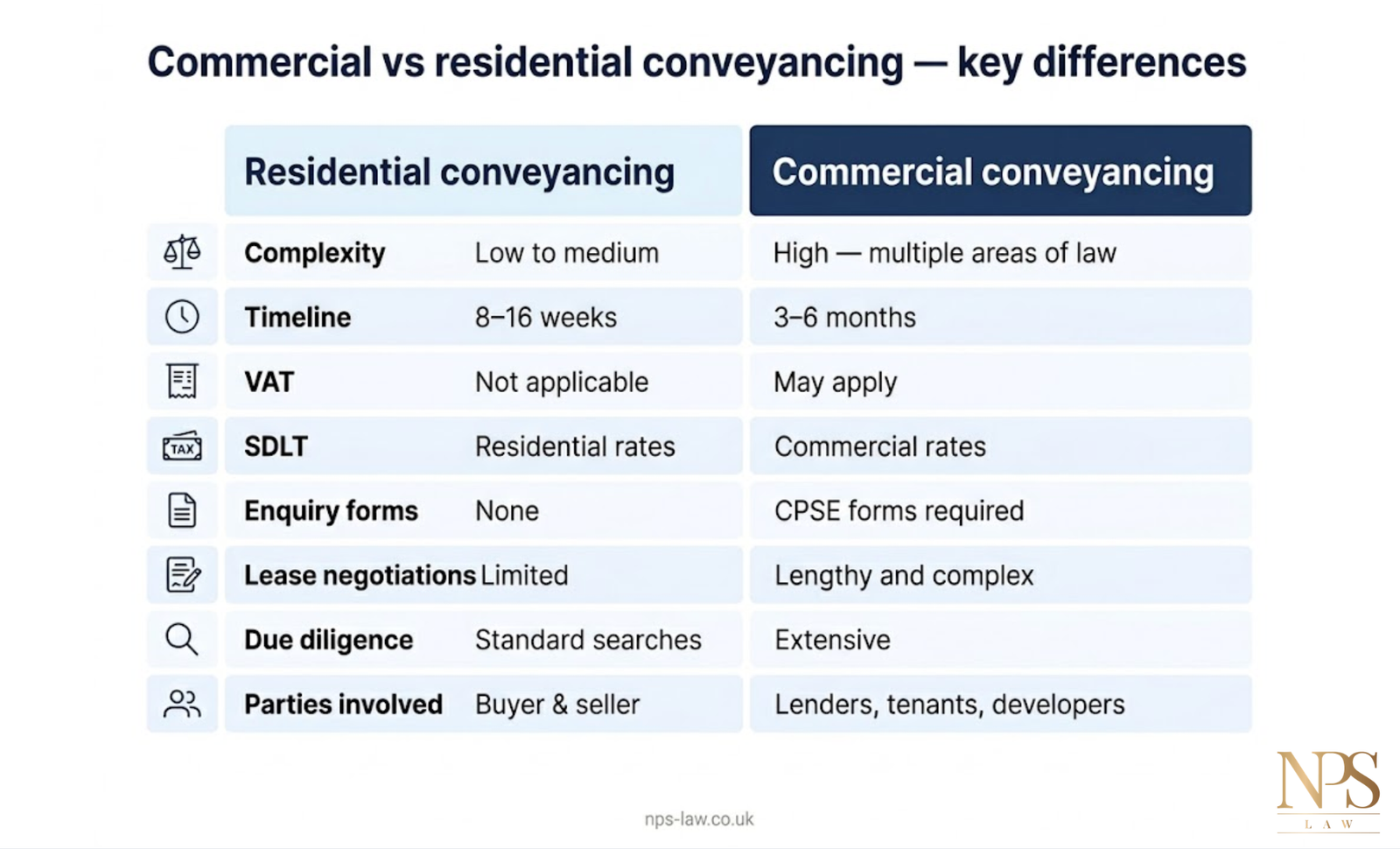
Many buyers who have previously purchased a home assume the commercial conveyancing process will be similar. In reality, commercial transactions are significantly more complex, more time-consuming, and carry greater legal and financial risk. Here is a clear comparison:
| Factor | Commercial Conveyancing |
|---|---|
| Complexity | High — multiple areas of law involved |
| Typical timeline | 3 to 6 months (sometimes longer) |
| VAT | May apply — depends on whether property is opted to tax |
| SDLT rates | Commercial rates (lower threshold, different bands) |
| Standard enquiry forms | CPSE forms (Commercial Property Standard Enquiries) |
| Lease negotiations | Often lengthy and highly negotiated |
| Due diligence | Extensive — environmental, planning, title, tenancy checks |
| Parties involved | Often includes lenders, tenants, developers, planners |
| Regulatory requirements | Planning, environmental, licensing, building regulations |
Commercial conveyancing covers a wide range of transaction types. Understanding which category applies to your situation helps you instruct the right solicitor and set realistic expectations for the process.
The most common type — the outright transfer of freehold or leasehold ownership from seller to buyer. This applies to businesses buying their own premises, investors acquiring commercial assets, and developers purchasing sites for construction.
Many businesses do not purchase commercial property outright — they lease it from a landlord for a fixed term. Commercial leases are typically far more complex than residential leases, involving detailed negotiations over rent reviews, break clauses, repair obligations, alienation rights, and service charges. A specialist solicitor is essential for reviewing and negotiating the terms of a commercial lease.
If you are purchasing land or a property for development, your solicitor will need to investigate planning permissions, environmental constraints, and any conditions attached to the site. This type of transaction often involves working alongside planning consultants, architects, and lenders.
When a business seeks to raise finance against a commercial property, a solicitor is needed to manage the legal aspects of the mortgage or charge. This involves verifying the title, liaising with the lender’s solicitors, and registering the charge at Companies House and the Land Registry.
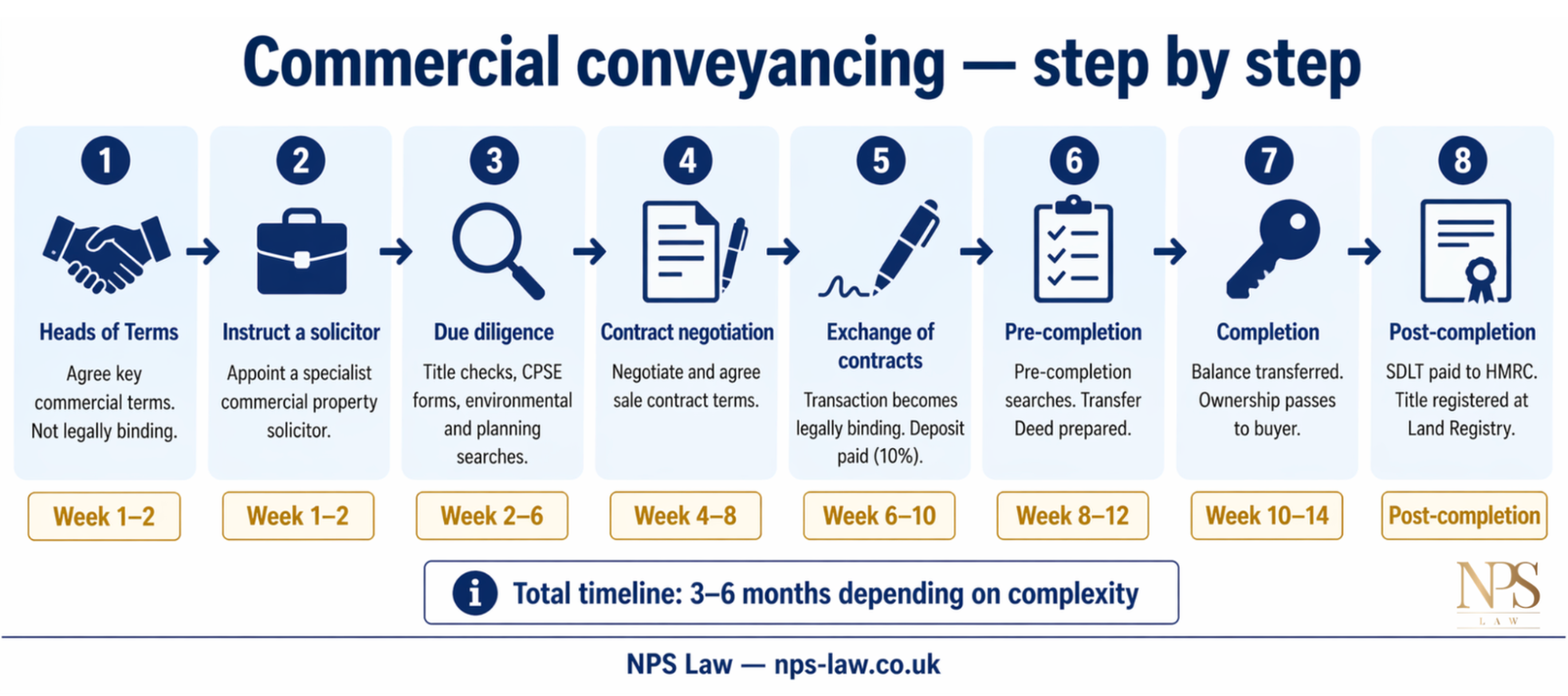
Commercial conveyancing follows a broadly similar structure to residential conveyancing, but with significantly more complexity at each stage. Here is what to expect:
Property searches are a critical part of commercial due diligence. Unlike residential searches, commercial searches are typically more extensive and can reveal issues that significantly affect the value or usability of the property.
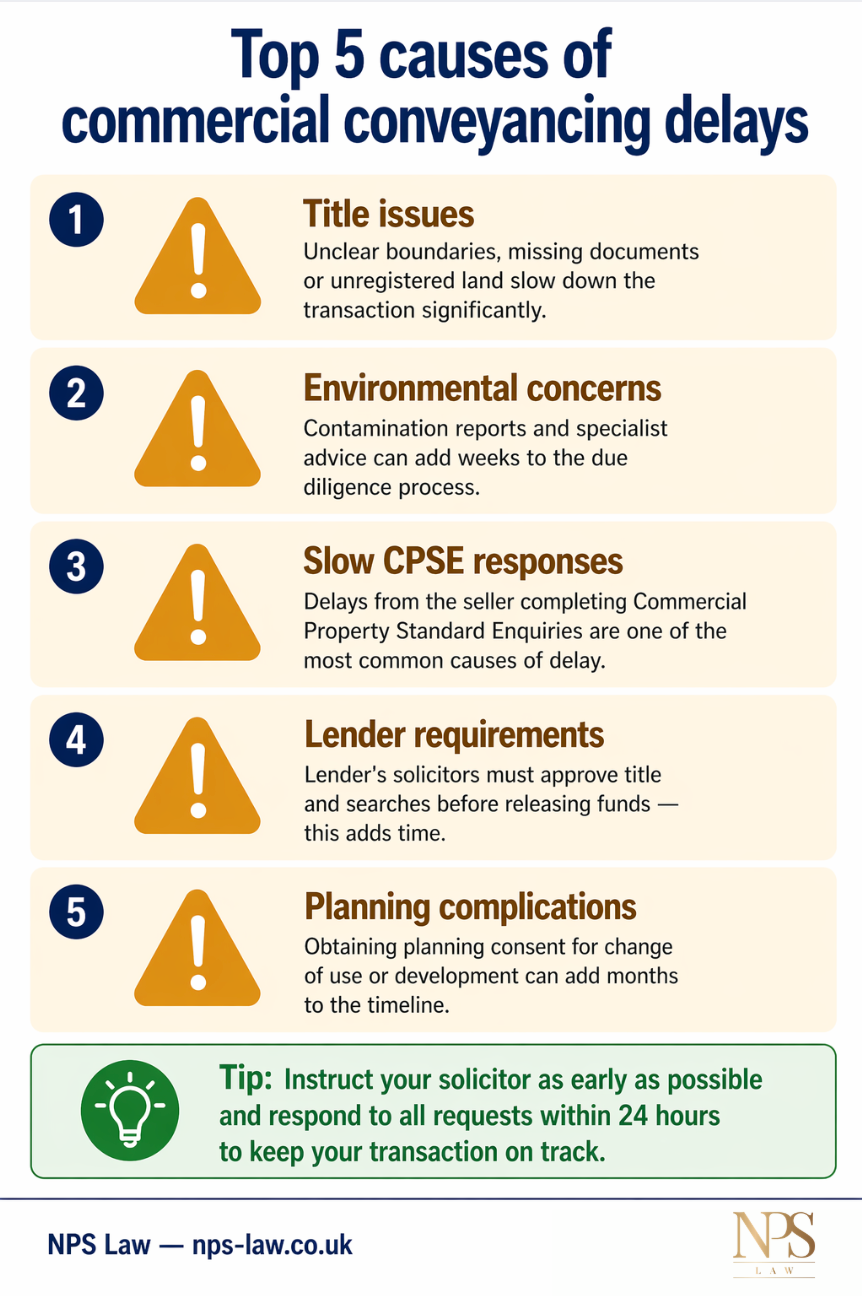
⚠️ Important: Commercial property searches can take significantly longer than residential searches — sometimes several weeks. Instruct your solicitor early to avoid unnecessary delays to your transaction.
Stamp Duty Land Tax is payable on most commercial property purchases in England and Wales. The rates for commercial property differ from residential property, and the thresholds are more favourable for lower-value transactions.
| Purchase Price | SDLT Rate (2026) | Notes |
|---|---|---|
| Up to £150,000 | 0% | No SDLT payable |
| £150,001 – £250,000 | 2% | On the portion above £150,000 |
| Above £250,000 | 5% | On the portion above £250,000 |
Key Fact: Unlike residential property, commercial SDLT does not have a higher rate surcharge for additional properties. However, VAT may also be payable if the seller has opted to tax the property — your solicitor will advise you on this.
SDLT must be paid and an SDLT return submitted to HMRC within 14 days of completion. Your solicitor will handle this on your behalf.
Commercial conveyancing typically takes between 3 and 6 months from the point of agreeing Heads of Terms to completion. However, complex transactions — particularly those involving development sites, multiple tenants, or lender requirements — can take considerably longer.
Commercial conveyancing costs are typically higher than residential conveyancing, reflecting the greater complexity and time involved. Costs vary significantly depending on the value of the property, the nature of the transaction, and the firm you instruct.
| Cost Component | Typical Range (2026) |
|---|---|
| Solicitor's legal fees | £1,500 – £10,000+ (depending on complexity) |
| Commercial property searches | £500 – £1,500 |
| Land Registry fees | £95 – £910 (based on property value) |
| SDLT | 0% – 5% of purchase price (see above) |
| VAT (if applicable) | 20% of the purchase price |
| Lender's solicitor fees | £500 – £2,000 (if purchasing with finance) |
| Environmental reports | £300 – £1,500 (if required) |
Always request a full written breakdown of all costs — including disbursements — before instructing a commercial conveyancing solicitor. Be cautious of firms that quote low headline fees but add significant extras later.
If you are buying an office, shop, or other business premises for the first time, commercial conveyancing is essential. Your solicitor will ensure the property is legally sound, that your intended use is permitted under planning law, and that the terms of the transaction protect your interests.
Investors acquiring commercial properties — whether individual units or larger portfolios — need specialist legal advice on title, tenancy agreements, SDLT planning, and VAT. A solicitor with commercial investment experience can identify risks that a generalist firm might miss.
Developers purchasing land or properties for conversion or construction require solicitors who understand planning law, development finance, and the complexities of phased completions and conditional contracts.
If you are taking on a commercial lease rather than purchasing outright, your solicitor will review and negotiate the lease terms on your behalf. Commercial leases are typically long and contain numerous clauses — including rent review provisions, repair obligations, and break clauses — that can have significant financial implications if not properly understood.
Choosing the right commercial conveyancing solicitor is one of the most important decisions in any commercial property transaction. Here is what to look for:
Looking for a specialist commercial conveyancing solicitor? Speak to the NPS Law team today for a free, no-obligation quote. nps-law.co.uk/contact
NPS Law is a specialist property law firm with three offices across the Midlands and full remote capability for clients anywhere in England and Wales. Our commercial property team has over 30 years of combined experience handling commercial transactions of all sizes — from small business premises acquisitions to complex development projects.
NPS Law — specialist commercial property solicitors serving clients across England and Wales. Get your free quote today. nps-law.co.uk
Commercial conveyancing covers the transfer of property used for business purposes, while residential conveyancing covers homes and personal property. Commercial transactions are significantly more complex, typically taking 3 to 6 months, and involve additional legal requirements including CPSE forms, VAT considerations, and complex lease negotiations.
While not legally required, instructing a specialist commercial conveyancing solicitor is strongly recommended. Commercial transactions involve complex legal, financial, and regulatory requirements that carry significant risk if not handled correctly. Most lenders will also insist on a solicitor being instructed.
Commercial conveyancing typically takes between 3 and 6 months from the point of agreeing Heads of Terms to completion. Complex transactions involving development sites, multiple tenants, or environmental issues can take longer.
Costs vary depending on the property value and the complexity of the transaction. Solicitor’s legal fees typically range from £1,500 to £10,000 or more, with additional costs for searches, Land Registry fees, and SDLT. Always request a full written breakdown before instructing.
CPSE stands for Commercial Property Standard Enquiries. These are standardised forms completed by the seller that provide the buyer’s solicitor with detailed information about the property — including title, planning, environmental matters, and any existing tenancies. There are currently seven CPSE forms, and the specific forms required depend on the nature of the transaction.
VAT on commercial property depends on whether the seller has opted to tax the property. If the seller has made a valid option to tax, VAT at 20% will be added to the purchase price. Your solicitor will investigate this during due diligence and advise you on the VAT implications before you commit to the transaction.
Yes. NPS Law handles both commercial and residential conveyancing, as well as wills and probate. If your transaction involves a mixed-use building or if you need assistance with estate planning alongside a commercial purchase, our team can advise on all aspects under one roof.
This article is for general informational purposes only and does not constitute legal advice. SDLT rates and regulations are subject to change. Always seek independent legal advice for your specific circumstances. NPS Law is regulated by the Solicitors Regulation Authority (SRA). SDLT rates sourced from gov.uk/stamp-duty-land-tax. Land Registry fees sourced from gov.uk/registering-land-or-property-with-land-registry.

©️ Copyright 2026 NPS Law is a trading name for NPS Law LLP. Solicitors of England and Wales. Authorised and Regulated by the Solicitors Regulation Authority. SRA Number 570169. A list of all Partners is available on the SRA directory for this firm. website designed by origin-media